
Vestibular Rehabilitation for Vertigo, Dizziness and Balance
Restore Your Balance. Reclaim Your Life.
Are You Living With Dizziness or Vertigo?
Dizziness and balance problems can be debilitating, affecting your ability to work, drive, or even walk through your own home. You are not alone, and more importantly, you are not “just dizzy.” There is a cause, and often, there is a treatment.
At Osteo and Physio, we pecialise in Vestibular Rehabilitation Therapy – an evidence-based approach to treating vertigo, inner ear issues, imbalance, and motion sensitivity.
At Osteo and Physio, we pecialise in Vestibular Rehabilitation Therapy – an evidence-based approach to treating vertigo, inner ear issues, imbalance, and motion sensitivity.


Is This Service for You?
Our specialized rehabilitation program is designed for individuals suffering from:
- Vertigo: A spinning sensation (often triggered by rolling over in bed, looking up, or bending over).
- Imbalance: Feeling unsteady, veering to one side, or having trouble walking in the dark.
- Motion Sensitivity: Dizziness triggered by rapid head movements, busy environments (like supermarkets), or scrolling on screens.
- Visual Disturbances: Blurring vision when moving your head or trouble focusing.
- History of Falls: Frequent slips, trips, or unexplained falls.
We can help with conditions including:
- BPPV (Benign Paroxysmal Positional Vertigo)
- Labyrinthitis & Vestibular Neuritis
- Meniere’s Disease (stable phase)
- Post-Concussion Syndrome & Whiplash
- Vestibular Migraine
- Age-related balance decline
Your Initial Assessment: What to Expect
We believe in a comprehensive approach. We don’t just treat the symptom; we investigate the
root cause. Your initial appointment includes a detailed 1-hour assessment covering:
We review your medical history, including medication use, previous ear surgeries, and lifestyle
factors. We will ask specifically about the timing and duration of your dizziness to help pinpoint
the trigger.
Safety is our priority. Our practitioners are trained to differentiate between inner ear problems
and other medical issues (such as stroke or central nervous system disorders). We perform:
- Cranial Nerve Screening: Checking facial sensation, eye movements, and swallowing reflexes.
- Oculomotor Testing: Assessing how your eyes track moving objects (smooth pursuit and saccades) to check for central processing issues.
- Blood Pressure Screening: Checking for postural hypotension (blood pressure drops when standing).
We use specialized tests to see how your balance system copes with stress:
- Positional Testing (Dix-Hallpike): To check for displaced crystals in the inner ear (BPPV).
- Head Impulse Test: To measure the reflex that keeps your eyes focused when your head moves. Dynamic Gait Index: We assess your stability while walking, turning your head, and stepping over obstacles.
- Balance Stress Tests: Standing on different surfaces (like foam) and with eyes closed to test your reliance on vision vs. inner ear signals.
Our Treatment Approach
Based on your diagnosis, we will create a customized rehabilitation plan.
- For BPPV: We use repositioning maneuvers (such as the Epley maneuver) to guide displaced crystals back to the correct chamber in the inner ear. This can often cure the problem in 1-3 sessions.
- For Gaze Instability: We prescribe specific eye-head coordination exercises to retrain your brain to keep vision clear during movement.
- For Motion Sensitivity: We use "habituation" exercises—controlled exposure to dizziness triggers to reduce the brain's hypersensitivity over time.
- For Imbalance: We work on "sensory integration," strengthening your ability to balance using your feet and inner ear when your vision is compromised (e.g., walking in the dark).
Our Goals:
- Reduce motion intolerance and hypersensitivity.
- Improve gaze stability (no more bouncing vision).
- Improve postural stability to prevent falls.
- Return you to your normal daily activities without fear of falling.

Why Choose Us?
Our vestibular rehabilitation practitioners have undergone specialized post-graduate training,
ensuring they are up-to-date with the latest evidence-based protocols for vestibular
rehabilitation.
We are trained to:
We are trained to:
- Accurately diagnose BPPV vs. Vestibular Hypofunction.
- Identify "Red Flags" requiring immediate referral to neurologists or acute stroke teams.
- Measure your progress using validated tools like the Dizziness Handicap Inventory and Dynamic Gait Index.
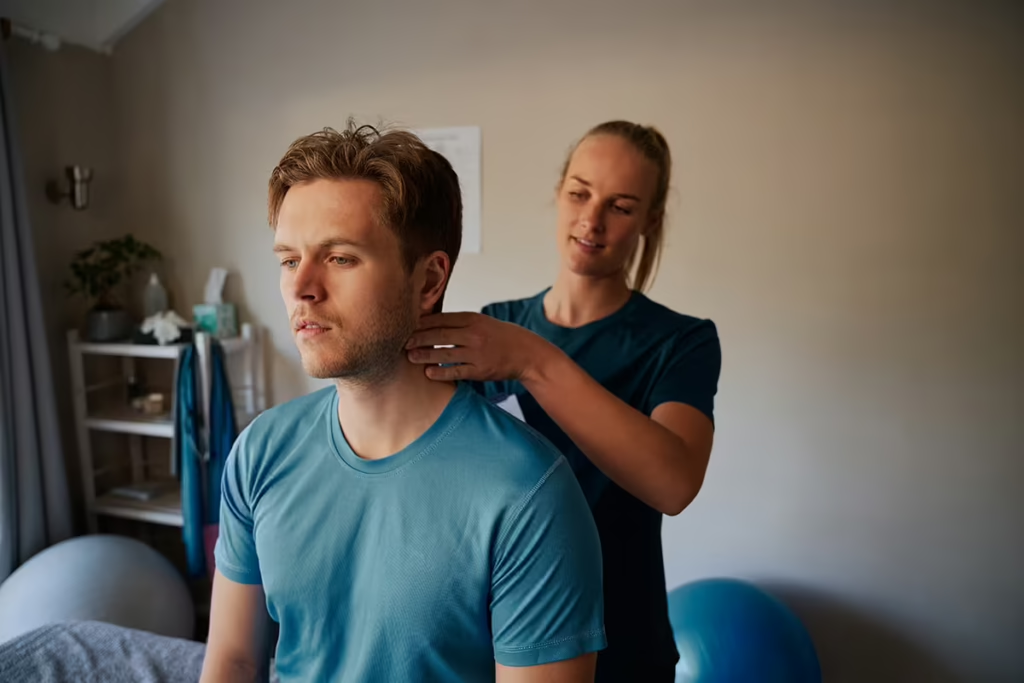
Prepare for Your Appointment
To get the most out of your assessment, please:
- 1. Bring a list of current medications (especially those for dizziness, blood pressure, or anxiety).
- 2. Wear comfortable clothing as we will be moving around and testing your walking.
- 3. Arrange transport if you are currently feeling too dizzy to drive safely, as the assessment maneuvers can sometimes temporarily trigger symptoms.
Our Goals:
FAQ
Will the treatment make me dizzy?
Some assessments and exercises are designed to reproduce your symptoms briefly so we can
measure them. However, we always allow time for you to settle before you leave the clinic.
How many sessions will I need?
This varies. BPPV can often be resolved in 1-2 sessions. Rehabilitation for neuritis or balance
retraining typically requires 6-12 weeks of guided home exercises with periodic check-ups.