
Optimise Your Stride: Professional Running Gait Analysis
Are you looking to improve your running PB, or are you tired of a recurring niggle holding you back? At Osteo & Physio we believe that understanding how you move is the first step to moving better.
Our specialist Running Gait Analysis is designed to bridge the gap between clinical treatment and peak athletic performance. By doing a deep dive into your body’s biomechanics, we help you run faster, recover quicker and reduce your risk of injury.
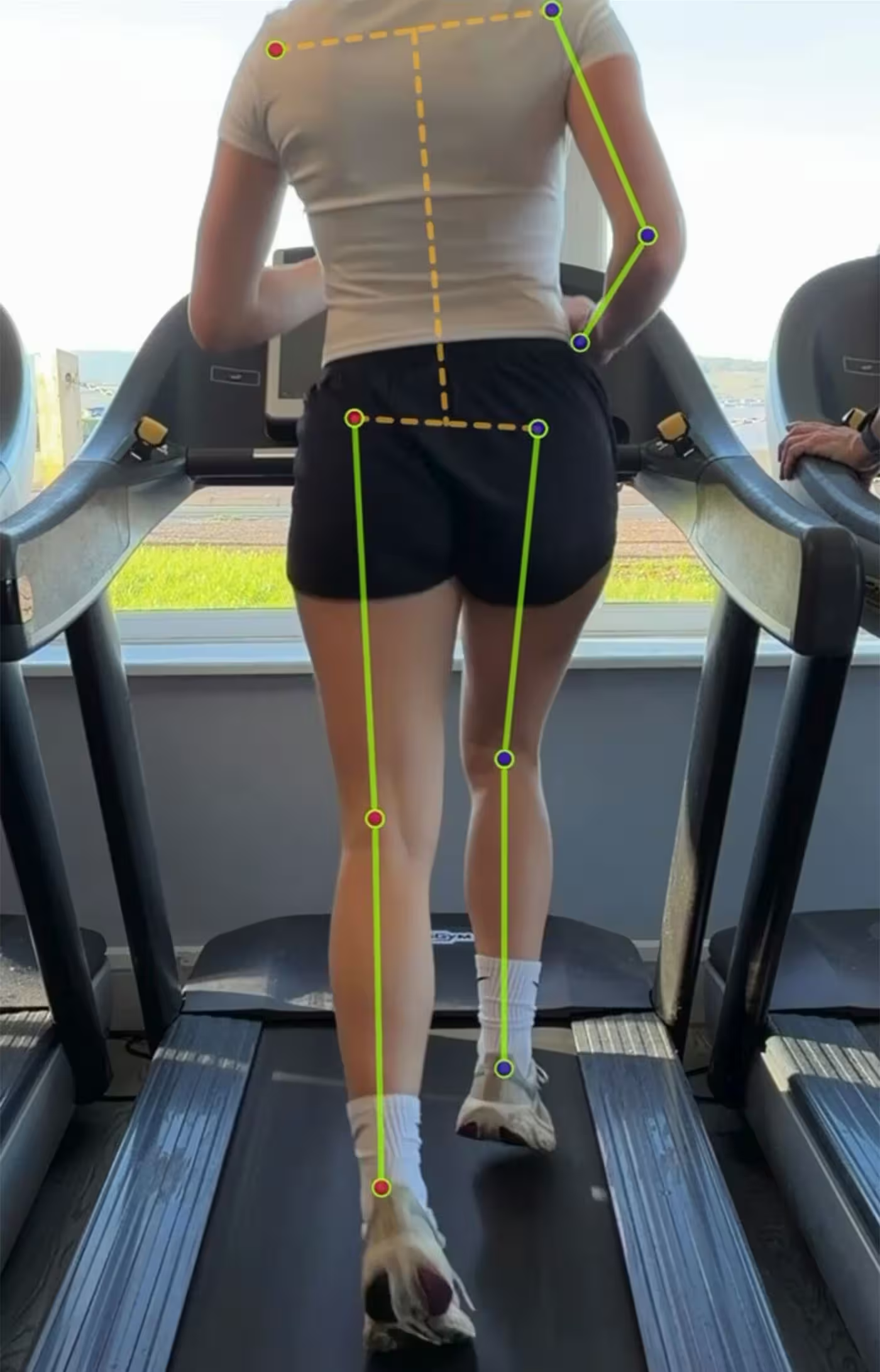
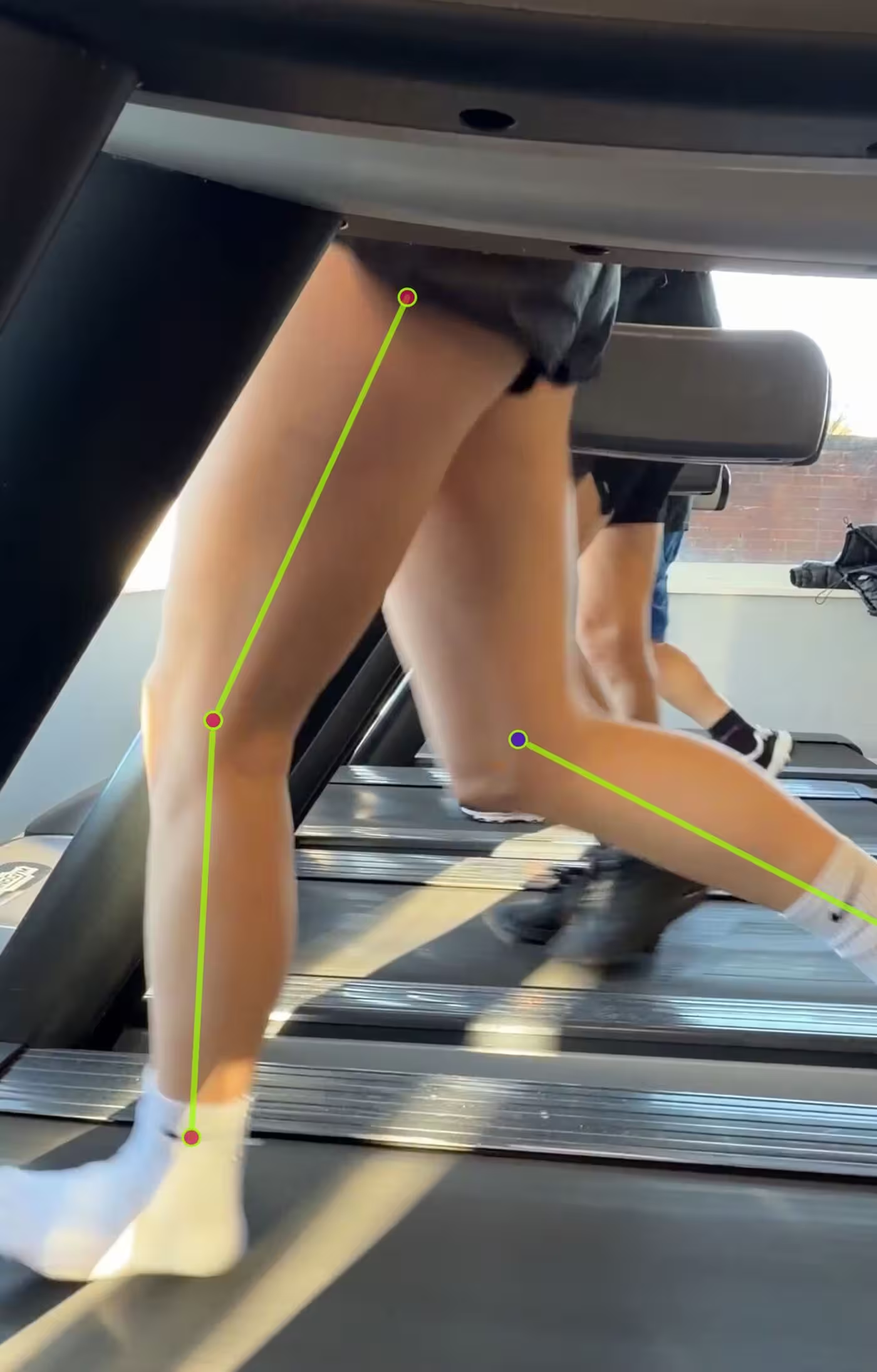
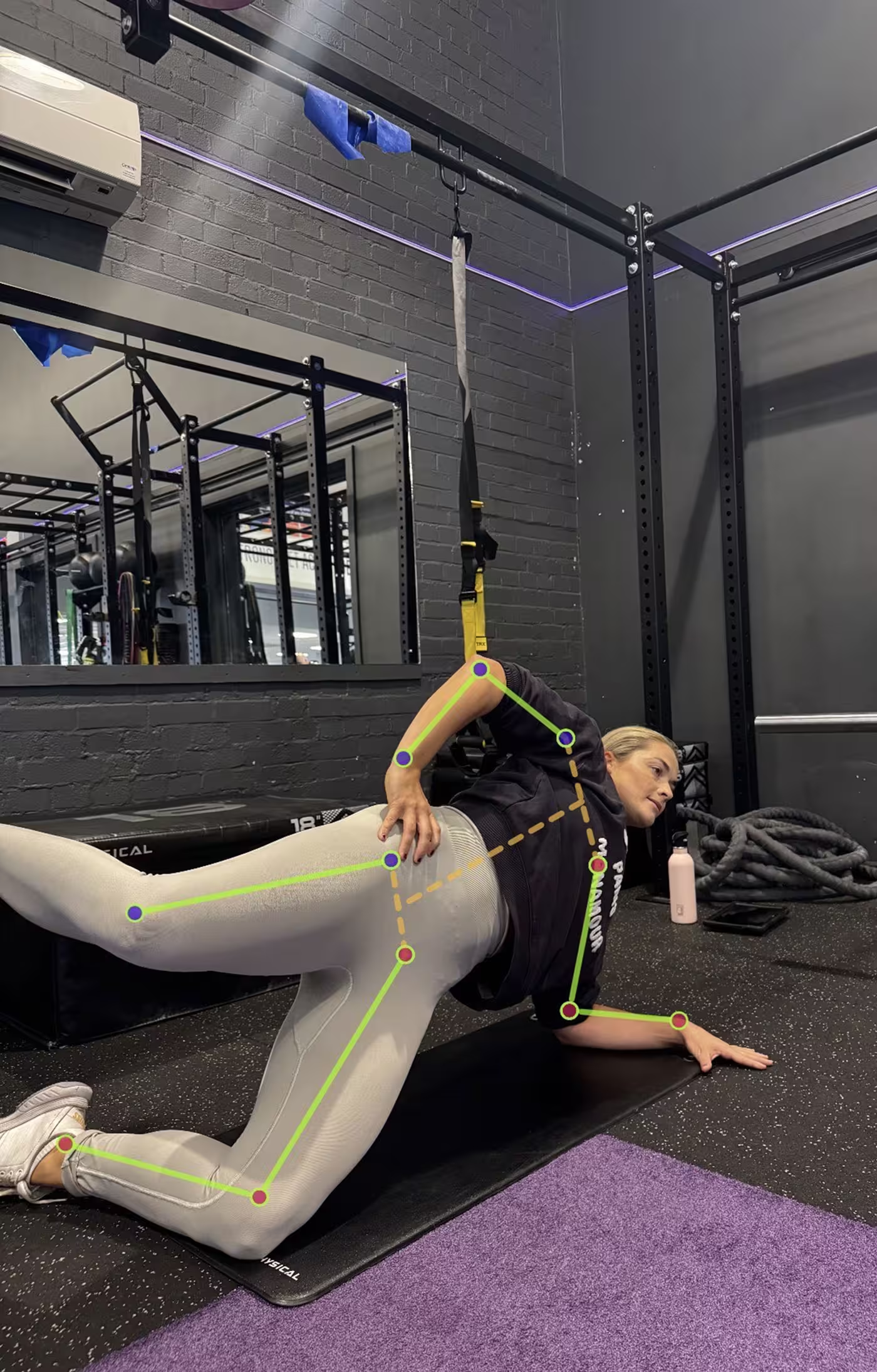
Running is a repetitive high-impact activity. Small inefficiencies in your form multiplied over thousands of steps can lead to overuse injuries or wasted energy. Our assessment provides a blueprint of your movement to help you:
- Reduce Injury Risk: Identify compensations that could lead to injuries for example shin splints, runner’s knee, or ITB syndrome.
- Improve Efficiency: Learn how to use your mechanics to run further with less effort.
- Enhance Performance: Optimise your cadence, foot strike and posture for maximum power output.
We take the assessment out of the treatment room and into the gym environment. Your session is conducted at a local leisure centre or gym near our clinic to ensure we capture your running style on a treadmill.
1. Comprehensive Filming & Software Analysis
Using advanced motion-analysis software, our MSK therapist (specialising in running gait analysis and biomechanics) captures your movement from multiple angles. We don’t just look at your feet; we look at how your entire body works as a system.
2. Full Biomechanical Breakdown
We analyse key data points, including:
- Foot Strike & Pronation: How your foot interacts with the ground.
- Joint Kinematics: The angles and mobility of your ankles, knees, hips, and spine.
- Strength & Stability: Identifying specific muscle weaknesses that may be affecting your form.
3. Your Personalised Performance Plan
Following the assessment, you won’t just receive data—you’ll receive a roadmap. Your therapist will design a bespoke plan focused on:
- Targeted Mobility: To unlock restricted joints.
- Functional Strengthening: To build a body capable of handling higher training loads.
- Technique Drills: Subtle cues to help you transition to a more efficient gait.
Your assessment is led by an MSK therapist specifically trained in running gait analysis. This clinical background means we don’t just see “how” you run, but we understand the underlying anatomy and pathology behind your movement.
To get the most accurate data from your gait analysis, it is important that we see you move exactly as you do during your regular training sessions. Please ensure you bring the following to your assessment:
- Your Current Running Shoes: Please bring the trainers you use most frequently. The wear patterns on your soles provide our therapists with valuable information about your foot strike and pressure distribution.
- Active Wear: Wear comfortable, form-fitting gym clothing (such as leggings, running shorts). Avoid overly baggy clothes, as the motion-analysis software needs to clearly see the alignment of your hips, knees and ankles.
- Hydration: As you will be running or power-walking on a treadmill for intervals, we recommend bringing a water bottle.
Frequently Asked Questions
Not at all. Whether you are training for your first 5K or your tenth marathon, understanding your biomechanics is key. In fact beginners often benefit the most as it helps establish healthy habits early and prevents the overuse injuries common when starting a new program.
Yes. These conditions are often symptoms of a biomechanical imbalance elsewhere for example weak glutes causing your knee to collapse inward, or stiff ankles putting extra strain on your arches. Our MSK therapists use the analysis to find the root cause of the pain rather than just treating the symptoms.
Absolutely. We are not qualified to provide shoe recommendations. We look at your joint mobility, muscle activation and overall movement patterns. Our primary focus is on improving how your body moves.
The session typically lasts 60 minutes. This includes an initial discussion of your goals/injury history, the filmed treadmill assessment and joint assessment and a review of the findings to begin building your personalised plan.
Don’t worry you don’t need to run a marathon on the treadmill! We only need short bursts of your natural running or power-walking gait (usually 1–2 minutes at a time) to capture the data we need. We move at a pace that is comfortable for you.
For your body to function well, its structure must also work well and be in good balance.
Treatment is individually tailored to each patient.
Advice on posture, diet and appropriate exercises are routinely given.